
Is under-eye filler safe?
You are asking whether filler under the eyes is safe. A plain yes would hide a published count of patients who had a problem there, so start with that count.
What a PMC paper reports
A paper on PMC reports: "We evaluated seven patients (7/31; 22.6%) who presented with a Tyndall effect and lymphatic edema in the under‐eye region several weeks to months after receiving HA‐based filler injection."
The sentence describes seven of 31 patients, in the under-eye region, with effects that showed up weeks to months after the injection. That timing matters when you look at your own paperwork.
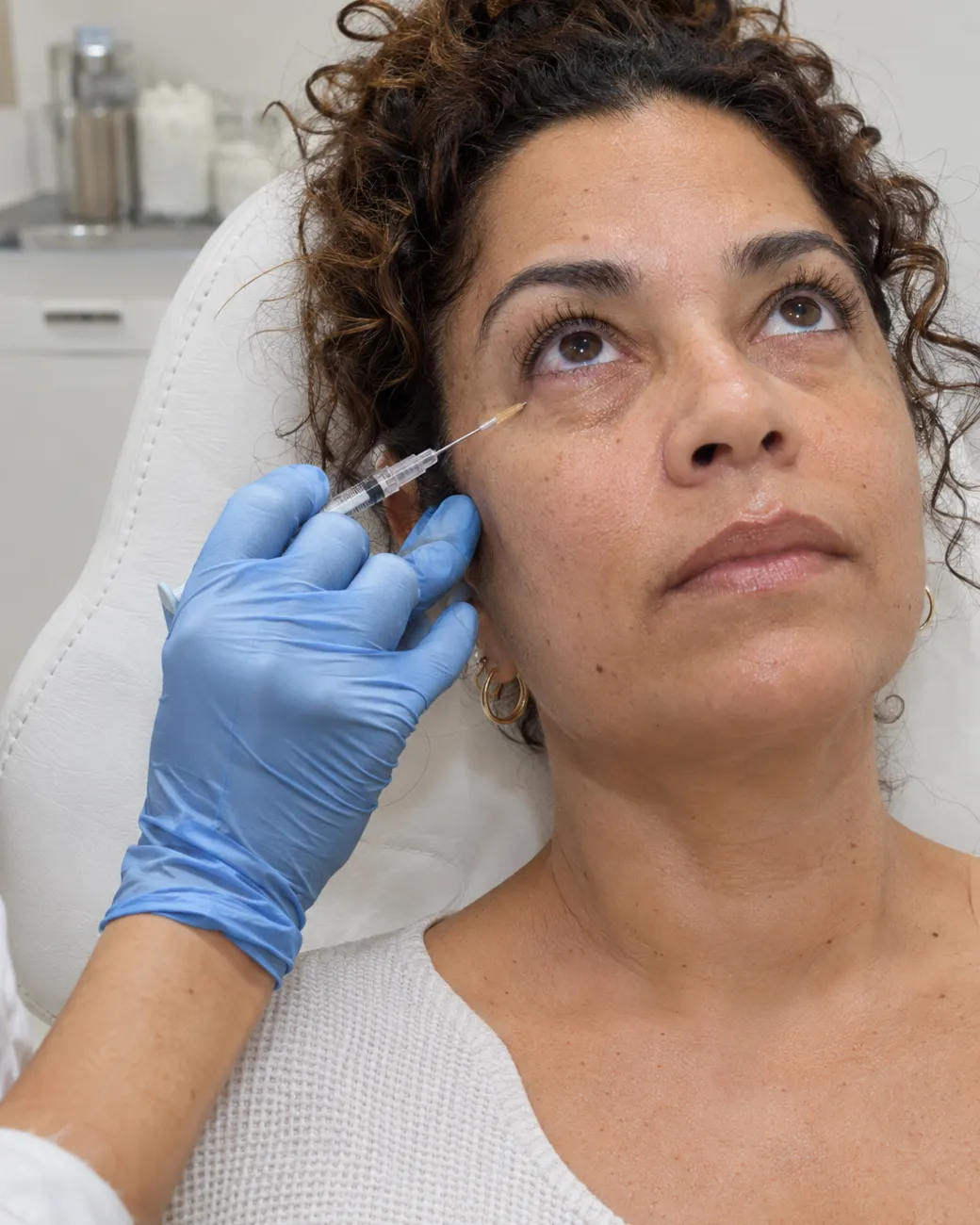
What to find in writing before you agree
Look for the under-eye area named in the consent form, not only the face in general. Then look for these terms:
- The name of the filler product to be used.
- Whether the form mentions a Tyndall effect or swelling in the under-eye region.
- What the practice does if a problem appears weeks or months after your visit.
If the form is silent on any of these, ask for the answer in writing.
What to read and ask next
Two more papers on PMC cover this part of the face. One is a real-world evidence report on a hyaluronic acid-based dermal filler in the periorbital region. The other is a prospective clinical evaluation of a cross-linked hyaluronic acid dermal filler.
The U.S. Food and Drug Administration publishes dermal filler dos and don'ts for wrinkles, lips and more for consumers. Bring your questions from all three to your appointment, whether you book in Concord, Sudbury or Maynard.
A closing observation
The count above is a reason to ask questions, and the answers belong on paper. Next, read whether dermal filler can be dissolved if you do not like it.